If you would like to understand how prescription drugs can cause sudden death, keep reading. It is a little technical, but I think you can get it. Please let me know if you would like more detail. :-)
Most healthcare professionals are not aware: There are many drugs that induce QT prolongation and torsades de pointes! Government agencies are aware:
US National Library of Medicine and the National Institutes of Health said this:
http://www.ncbi.nlm.nih.gov/pmc/articles/PMC1767957/
What is QT prolongation and torsades de points?
Most healthcare professionals are not aware: There are many drugs that induce QT prolongation and torsades de pointes! Government agencies are aware:
US National Library of Medicine and the National Institutes of Health said this:
- Drug induced QT prolongation and torsades de pointes are an increasing public health problem
http://www.ncbi.nlm.nih.gov/pmc/articles/PMC1767957/
What is QT prolongation and torsades de points?
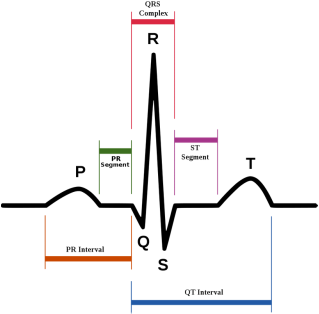
To understand torsades, you have to learn a little physiology:
Electricity causes the heart to beat. EKGs show a picture of the electricity that moves through the heart.
The waves and dips on a normal EKG strip each have a letter name: the P wave, the QRS complex and the T wave.
Measuring the intervals between the segments gives an idea of how efficiently each electrical impulse moves through the heart.
As an ICU nurse I measured and documented the PR interval, the QRS complex and the QT interval on every patient every four hours while they were in the ICU.
If the electricity does not move fast enough or gets blocked, the heart does not beat properly.
Sometimes slowed or blocked pathways cause fatal heart rhythms. One of the fatal heart rhythms is torsades de pointes.
Electricity causes the heart to beat. EKGs show a picture of the electricity that moves through the heart.
The waves and dips on a normal EKG strip each have a letter name: the P wave, the QRS complex and the T wave.
Measuring the intervals between the segments gives an idea of how efficiently each electrical impulse moves through the heart.
As an ICU nurse I measured and documented the PR interval, the QRS complex and the QT interval on every patient every four hours while they were in the ICU.
If the electricity does not move fast enough or gets blocked, the heart does not beat properly.
Sometimes slowed or blocked pathways cause fatal heart rhythms. One of the fatal heart rhythms is torsades de pointes.

Torsades is a crazy heart rhythm that is not sustainable. It is too fast for blood to adequately fill the chambers and get pumped out to the body. In torsades, the head and heart do not get supplied with fresh blood and oxygen. Within minutes fainting and death occur.
Long QT syndrome is when the resting phase of the heart is elongated. A long QT interval puts a person at risk for torsades. Some people are born with long QT syndrome.
Some drugs have been found to prolong the QT interval. This can be dangerous for someone who already has a long QT. A prolonged QT interval can develop into torsades de pointes, which can cause sudden death. The chances of a drug-induced fatal heart rhythm are very small in normal healthy adults. But the elderly, children and babies are more susceptible to drug-induced QT prolongation.
Some drugs affect the normal beating of the heart and we don't even know it.
At QTDrugs.org I found: "AZCERT is an independent non-profit research and education organization that supports CredibleMeds, an educational program to improve therapeutic outcomes and reduce adverse events caused by drug interactions and drugs that cause heart arrhythmias." They have studied patients born with long QT syndrome to find out which drugs are safe and which can be fatal for congenital long QT syndrome. In the process, they have found hundreds of drugs which have risks for QT prolongation, possible risks and risks under certain conditions.
What does this mean? Many of the drugs we think are completely harmless have been linked with QT prolongation! That means these drugs prolong the resting phase of the heart. These drugs have the potential to change the heart rhythm. Millions of healthy people take these drugs and don't notice a thing. At risk are the elderly and the very young and those who have long QT syndrome to begin with.
Some drugs have been found to prolong the QT interval. This can be dangerous for someone who already has a long QT. A prolonged QT interval can develop into torsades de pointes, which can cause sudden death. The chances of a drug-induced fatal heart rhythm are very small in normal healthy adults. But the elderly, children and babies are more susceptible to drug-induced QT prolongation.
Some drugs affect the normal beating of the heart and we don't even know it.
At QTDrugs.org I found: "AZCERT is an independent non-profit research and education organization that supports CredibleMeds, an educational program to improve therapeutic outcomes and reduce adverse events caused by drug interactions and drugs that cause heart arrhythmias." They have studied patients born with long QT syndrome to find out which drugs are safe and which can be fatal for congenital long QT syndrome. In the process, they have found hundreds of drugs which have risks for QT prolongation, possible risks and risks under certain conditions.
What does this mean? Many of the drugs we think are completely harmless have been linked with QT prolongation! That means these drugs prolong the resting phase of the heart. These drugs have the potential to change the heart rhythm. Millions of healthy people take these drugs and don't notice a thing. At risk are the elderly and the very young and those who have long QT syndrome to begin with.
| I pulled these familiar drugs from the 'high risk' for TorsadesdePoint list: Erythromycin Erythrocin® Azithromycin Zithromax® Haloperidol Haldol® Droperidol Inapsine® Thioridazine Mellaril® Pentamidine NebuPent® Disopyramide Norpace, Pimozide Orap® Amiodarone Pacerone® Amiodarone Cordarone®, Pentamidine Pentam® Procainamide Pronestyl® Cisapride Propulsid® Quinidine Quinaglute® Terfenadine Seldane® Mesoridazine Serentil® Flecainide Tambocor® Chlorpromazine Thorazine I pulled these from the 'possible' risk of torsades list: Famotidine Pepcid® Oxytocin Pitocin® Venlafaxine Effexor® Escitalopram Lexapro® Levofloxacin Levaquin® Lithium Lithobid® Lithium Eskalit | I pulled these familiar drugs from the 'risk of torsades under certain conditions' list: Diphenhydramine Benadryl® Antihistamine / Allergic rhinitis, insomnia Risk of QT increase/torsades in overdosages Diphenhydramine Nytol® Antihistamine / Allergic rhinitis, insomnia Risk of QT increase/torsades in overdosages Paroxetine Paxil® Anti-depressant / depression Sertraline Zoloft® Anti-depressant / depression Fluoxetine Prozac® Anti-depressant / depression Fluoxetine Sarafem® Anti-depressant / depression Fluconazole Diflucan® Anti-fungal /Drug interaction risk- metabolic inhibitor. Can also increase QT at high doses - 800 mg/day Amitriptyline Elavil® Tricyclic Antidepressant / Risk of TdP with overdosage Ciprofloxacin Cipro® Antibiotic / bacterial infection Drug interaction risk - metabolic inhibitor Trimethoprim-Sulfa Septra® or Bactrim® Antibiotic / bacterial infection Also available in DS (double strength) Clomipramine Anafranil® Tricyclic Antidepressant Desipramine Pertofrane® Tricyclic Antidepressant / Risk of TdP with overdosage Doxepin Sinequan® Tricyclic Antidepressant Imipramine Norfranil® Tricyclic Antidepressant / TdP risk with excess dosage Itraconazole Sporanox® Anti-fungal / fungal infection Drug interaction risk - metabolic inhibitor Ketoconazole Nizoral® Anti-fungal / fungal infection Prolongs QT & Drug interaction risk - metabolic inhibitor. Nortriptyline Pamelor® Tricyclic Antidepressant Protriptyline Vivactil® Tricyclic Antidepressant Ritonavir Norvir® Protease inhibitor / HIV Solifenacin VESIcare® / treatment of overactive bladder Trazodone Desyrel® Anti-depressant / insomnia Trimipramine Surmontil® Tricyclic Antidepressant |
US National Library of Medicine
National Institutes of Health
Drug induced QT prolongation and torsades de pointes: key points
National Institutes of Health
Drug induced QT prolongation and torsades de pointes: key points
- Drug induced QT prolongation and torsades de pointes are an increasing public health problem
- Antiarrhythmic drugs, non-sedating antihistamines, macrolides antibiotics, antifungals, antimalarials, tricyclic antidepressants, neuroleptics, and prokinetics have all been implicated in causing QT prolongation and/or torsades de pointes
- Co-administration of multiple drugs, especially with other QT prolonging drug(s) and/or hepatic cytochrome P450 CYP3A4 isoenzyme inhibitors, must be avoided, [drugs that impair the liver...which is most cholesterol lowering drugs]
- The risk of QT prolongation is increased in females, patients with organic heart disease (for example, congenital long QT syndrome, myocardial infarction, congestive heart failure, dilated cardiomyopathy, hypertrophic cardiomyopathy, bradycardia), hypokalaemia [low potassium, which happens when a person has is dehydrated or has diarrhea] and hepatic impairment
- The treatment of drug induced torsades de pointes includes identifying and withdrawing the offending drug(s), replenishing the potassium concentration to 4.5–5 mmol/l, and infusing intravenous magnesium (1–2 g). In resistant cases, temporary cardiac pacing may be needed
 RSS Feed